
Changing Perceptions on Sight Loss in Style
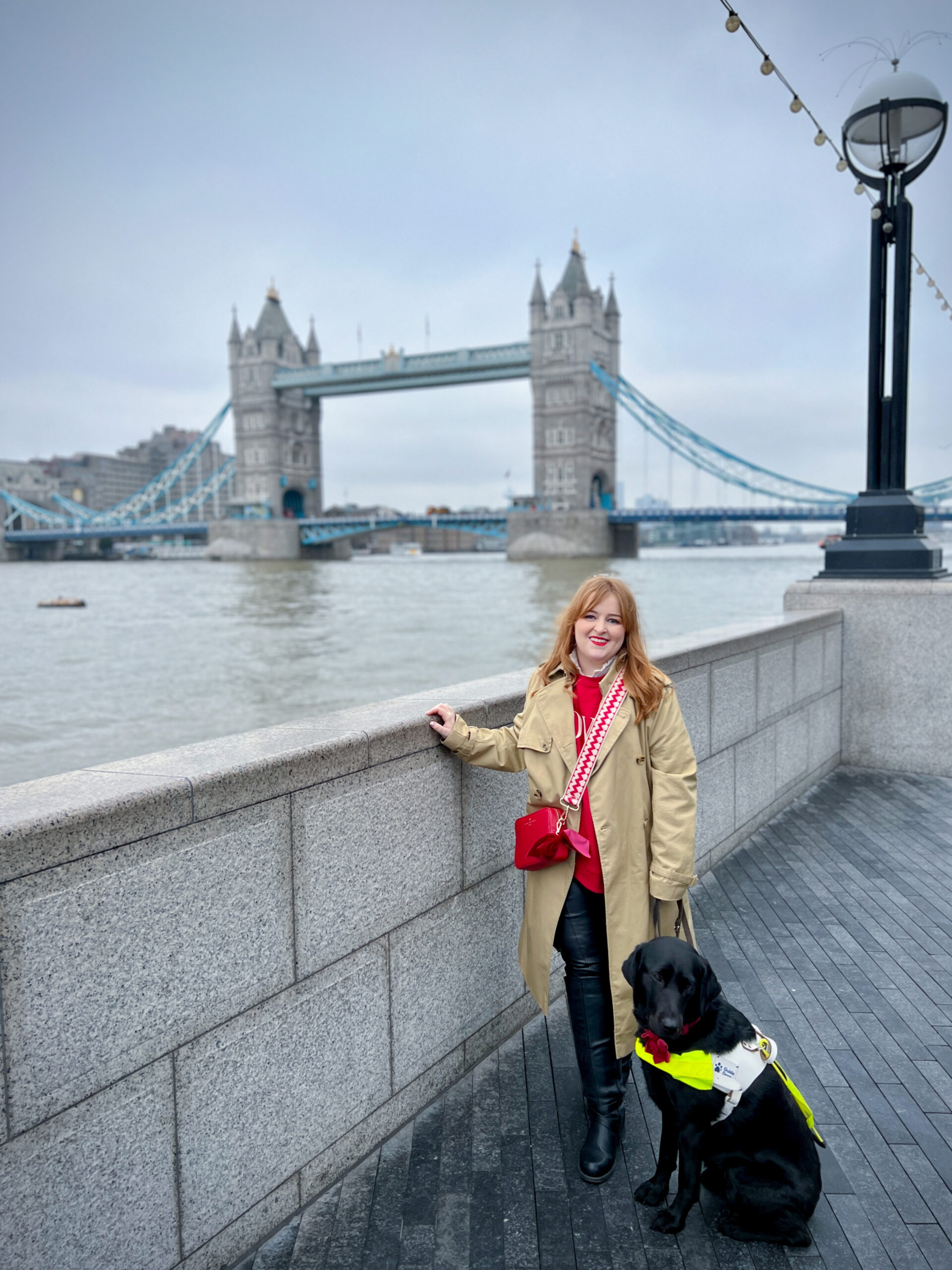
These are some of the things that I wish were accessible as a visually impaired person that normally aren’t. For more on making products and experiences inclusive, read my explanation of universal design.
One of the biggest issues I face as a visually impaired woman who loves to buy and wear makeup is just how inaccessible makeup packaging is.

Often the packaging is written in the tiniest size font and it is impossible to read things like shade names, ingredients and even prices.
Sometimes the print is so small it’s even impossible to use the camera on my phone to read what it says.
There are some apps and devices like Seeing AI and Orcam that can read certain barcodes and NaviLense that can tell you product information with specific codes.
However, not all brands are affiliated with these brands or are part of their barcode database and many makeup brands aren’t part of the database makes it difficult to shop and find products.
Sometimes I wonder if some a lot of beauty brands actually realise that people like me, who are visually impaired actually can and do want to wear makeup.
That’s not to say there aren’t some brands doing great work for visually impaired people like Eestee Lauder and Herbal Essences.
But there is a lot of work to be done and a lot of work for improvement.
Another consistent issue I face is knowing how to care for and wash my clothes, all the care labels on clothes that I’ve come across have very small writing with tiny symbols indicating how to wash them.
I worry that I’m going to wash or dry an item incorrectly and run the risk of shrinking it or damaging the fabric, especially if the garments need to be dry cleaned.
I often wish clothing brands would have an accessible QR code that you could scan to get information on how to care for garments and products.
Fast fashion is an industry where I could foreshadow this being an issue, however I would love to see more specialist, high end and even handmade brands implement this as a feature for their visually impaired customers.
Even though a lot of the medical profession in the UK is becoming more digital with more hospitals and GP surgeries now going online.
I still often find that I get sent print letters confirming my appointments, tests results and other medical information which isn’t accessible to me.
Of course, I am able to scan it in using apps like Seeing AI or Prizmo on my iPhone, however what about those people who don’t have access to a phone?
Whilst technology is a useful and, for many, vital tool, companies shouldn’t be relying on it to do their jobs for them.
Especially when it involves crucial information involving things like health, finance, and personal information.
I’m a foodie, I love going to restaurants as a journalist it’s a big part of my job, going to review and try new local restaurants in my area.
But a lot of the time restaurant menus have very small print and you either have to use your phone to read the menu back to you using apps like I mentioned above.
Or you have to look it up online or worse ways, ask a sighted person to read it to you.
I have been to some restaurants like Pizza Express where they offer braille and large print menus which is such a great thing to see.
As much as I’m the sort of person to always have a charged phone and a portable charger for backup for reasons such as these, life happens.
So again, to have restaurants who provide alternative means to read their menus that don’t rely on the use of a personal device would be a great thing to see.
I’m very independent, but one of the issues I have when going out is getting around train stations and underground stations.
The signs are high up and aren’t very easy to read, making it difficult to negotiate train stations alone especially during busy times.
There are improvements into this field, including the development of a new app called NaviLens Go which is an app allowing you to use scannable codes to navigate around certain spaces.
Of course, this app is only in its early stages and its only available at certain places.
I was actually lucky enough to test it out at Euston Station last year and if the app continues to expand and grow, I think this genuinely could be a great way forward.
I’ve touched upon this subject before, but honestly voting as a visually impaired person in the UK has been one of the most difficult things to navigate.
Voting isn’t digital, there’s no way of voting online or electronically here in the UK.
So instead you either have to vote by post or vote in person at a polling station on the day itself.
However, despite polling stations having a responsibility to have things like large print ballot papers and braille overlays, a lot of the time they don’t.
What’s more, legally you’re not permitted to take a photo of the ballot paper when you vote, so this is very limiting when you rely on technology to read print documents.
There was one time where I had to have a sighted stranger who was working at the polling station come into the booth to help me vote.
As a voter I felt this was the highest violation of the right to privacy that I’m entitled to, yet my disability inhibits this.
So, I ended up choosing to vote by post where I could at least have some degree of privacy and make my voting experience more accessible.
What do you think of my list?
