Changing Perceptions on Sight Loss in Style
I’m visually impaired and these are five of the most common myths people have about my disability. I also share some of my experiences in ways to live positively with a visual impairment.
People often ask me what some of the most common misconceptions or myths are about visual impairment, and honestly, there are so many.
I could fill an entire book with the misconceptions people have. But there are certainly some that stick more rigidly in my mind than others, probably because I hear them so often.
You all know the most common one that I’ve talked about before, and it’s the reason why I started this blog. It’s when people say to me, “You don’t look blind.” Because honestly, what does blind look like?
But today, for old times’ sake, after posting one of the most-watched videos on my YouTube channel about common misconceptions around visual impairment, I thought I’d bring back a classic and talk about them again. Some of them have changed, and some of them remain the same.
So, let’s begin.
One of the things I often hear is, “Won’t glasses help?”
Whilst I try to remain civil when I reply, I do have to chuckle, because honestly, if glasses helped me, I would certainly be wearing them. I’m not a glutton for punishment.
I think people just assume that glasses are a fix-everything approach when it comes to sight loss. But the way we see is made up of three components: the eyes, the optic nerves, and the brain. My sight-related condition is impacted because my optic nerves are underdeveloped. It has nothing to do with my eyes. My eyes are actually very healthy.

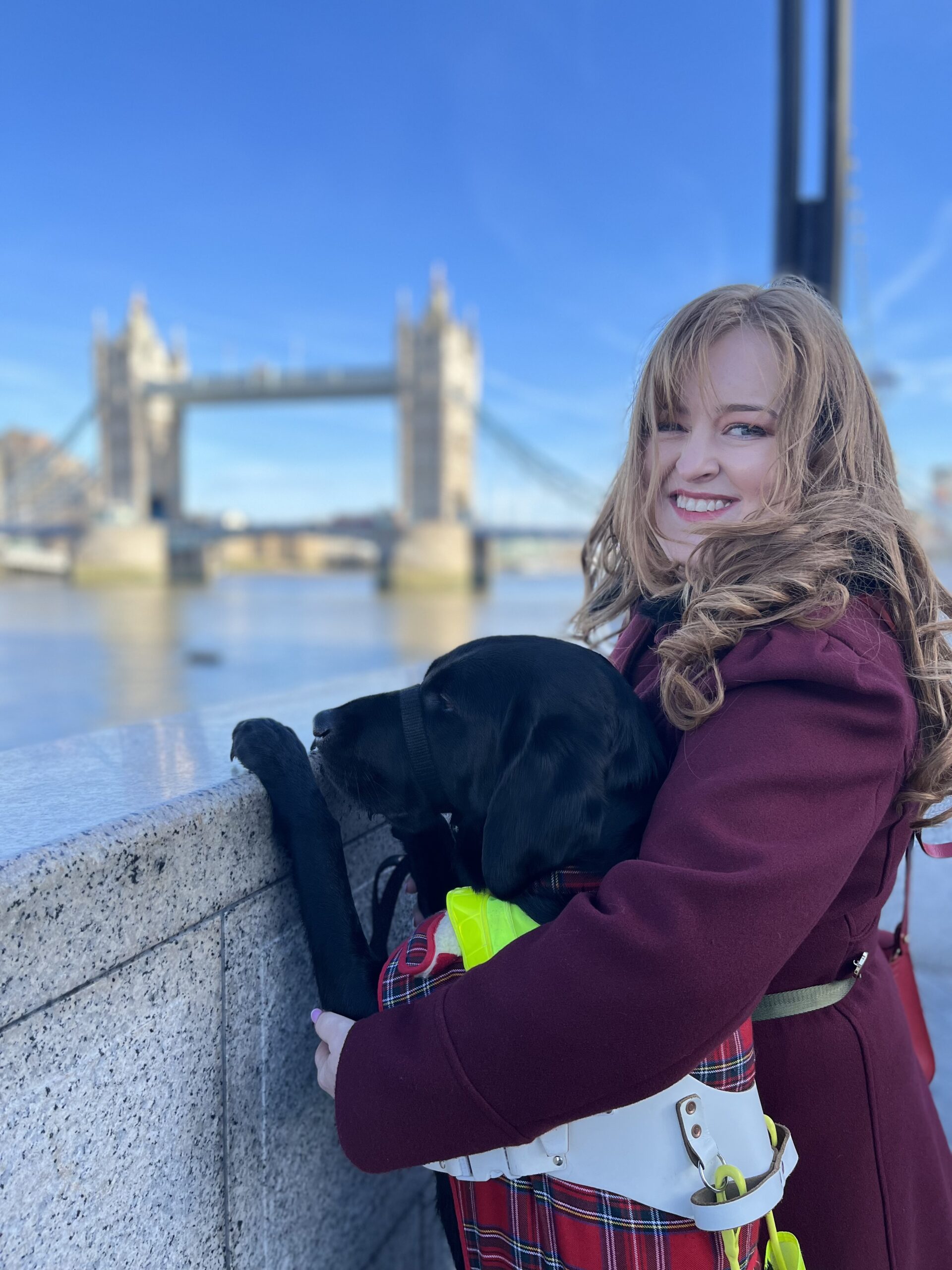
Another really common misconception I come across all the time is that people assume I have no sight whatsoever because I use a guide dog. When they realise I can actually see, they sometimes act like they’ve caught me out in some big scam.
But honestly, sight loss is a huge spectrum, and there are so many different eye conditions that affect people in varying degrees. Some people can see absolutely nothing at all, not even light perception. Some people can see colours or shapes, and some people can read a book like I can, albeit in large print.
It’s a really broad spectrum. Another important thing to remember is that eyesight can fluctuate depending on lighting conditions or even how tired a person is. No two people with a sight condition are the same, and no two people will see the same way.
This is another one I hear all the time, and it usually falls under the “you don’t look blind” bracket.
People often see the way I look, how I dress, and notice things like how I do my hair and makeup. Then they’ll usually comment that I don’t look like I have a visual impairment. Often, this is doubled with the assumption that people who can’t see wouldn’t want to take an active interest in their appearance.
But this just isn’t true.
So many visually impaired men and women are conscious about the way they look. They want to take pride in their appearance, and they want to have their own personal style because it’s part of their personality.
I’ve met people with some of the quirkiest dress sense imaginable who can’t see at all, experimenting with really vibrant colours and fabrics, swishy skirts, you name it.
The point is that fashion, beauty, and self-care make us feel better. Every person, regardless of disability, has the right to want to feel good about themselves.
This might sound like a strange one, but the amount of times people have assumed I can’t use stairs is unbelievable. They’ll say things like, “I’ll show you where the lift is,” or “Are you able to do stairs?”
See more fashion, travel, beauty and accessible lifestyle content on Instagram.
Follow @fashioneyesta2012I know it usually comes from a place of kindness, and people are often trying to make my life easier, but there seems to be this assumption that visually impaired people can’t use stairs.
Contrary to what people might think, we don’t all live in bungalows or Hobbit houses. Many of us live in flats or houses with stairs, and we’re very used to going up and down them.
Of course, there are times when I don’t use stairs because of my chronic illness and not because of my visual impairment. But for the most part, yes, I can use stairs.
I could talk all day about this one.
Whilst I recently spoke about the issues I’ve been having at work because my Access to Work grant was cut massively, I’ve had some form of a job ever since I turned 18.
I first worked at my university as a student ambassador, doing lots of different tasks, from giving tours to prospective students to helping the marketing team during busy periods. After that, I worked in retail as well as freelancing, and now I’m a full-time journalist.
I’ve always wanted to work, and I’ve always taken pride in the fact that I’ve earned some kind of living, even if it was part-time.
The point is that visually impaired people often really do want to work, but it can be hard to find a job that is suitable for them, as well as an employer willing to hire them.
And if you manage to cross both of those bridges, you then have to navigate systems like Access to Work, where wait times can reach up to 37 weeks just to get a grant in place.
So no, it isn’t easy. But lots of visually impaired people, including me, do work, and we work in all kinds of sectors. I’ve known people who’ve worked for big marketing companies, people who work as accountants, people who work in the media like me, and people who work in retail.
It really does vary. The point is that visually impaired people do want to work, and often can and do work. But so often I still get asked questions like, “Can you work?” or “Are you able to work?” These questions come from the assumption that visually impaired people can’t lead independent and productive lives, which we absolutely can.
So those are some of the most common misconceptions I get as a visually impaired person. There are so many more I could add to this list, but this gives you an idea of the kinds of comments I hear on a regular basis.
I hope posts like this help challenge some of those assumptions and remind people that visual impairment is not one-size-fits-all. Every person’s experience is different, and the more people understand that, the better.

Fashioneyesta
Follow along for fashion, travel, beauty, accessibility and lifestyle updates.