Friends of Lush
Referral link associated with a free Celebrate Bath Bomb offer.
Visit Friends of Lush
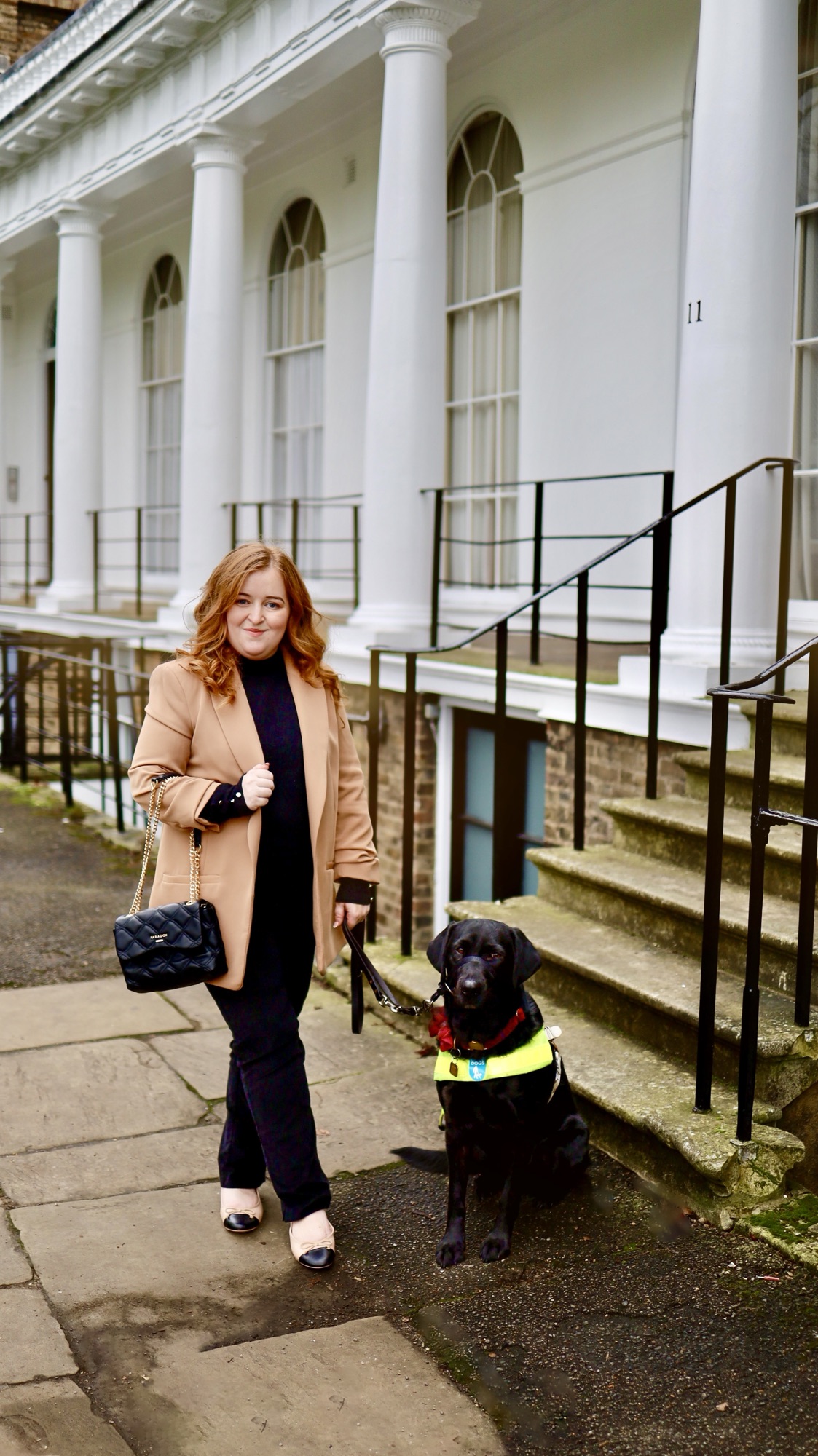
These are five of the most common questions about being visually impaired that I get asked—from why I don’t wear glasses to how I use my phone and work as a journalist. Here are my answers, drawn from my own life with sight loss.
Greetings, readers! Today we’re going a bit old school. Some of my original Fashioneyesta readers may remember my early posts about life with sight loss. I thought I’d return to that topic and share the questions that still come up.
This is my experience, rather than a description of every visually impaired person’s life. We don’t all see the same things, use the same tools or feel the same way about our disability.
Jump to a question
I get asked this frequently, and the answer is quite simple: they don’t help me. So why would I wear something that doesn’t benefit me?
Glasses and contact lenses can help some people, but they cannot correct every cause of sight loss. The NHS low-vision clinic explains this distinction. My sight loss cannot simply be corrected with glasses, contact lenses or laser eye surgery.
I talk about my own experience in more detail in this video:
This is another question I get asked—not always in the most polite manner—when people see me out with Rosie, my guide dog, while I’m texting on my phone.
Phones, tablets and laptops have accessibility features that can read out what is on the screen or enlarge text. Using a phone does not mean someone cannot be visually impaired.
Accessibility features worth exploring
My video below shares useful apps for reading, shopping and travel:
People often ask whether my disability can be cured. I think this can come from a place of kindness: they feel saddened by my disability and want something to make it better.
But I also think the media has helped perpetuate the idea that disability is the end of the story, and that life as a disabled person is somehow not worth living. Finding a “cure” becomes the only thing people can think about.
Being disabled doesn’t mean you can’t thrive, have a career, enjoy a social life and be happy.
Please don’t assume that every disabled person feels the same way about a cure, or that disability makes a fulfilling life impossible. There is much more to my life than my sight loss.

I’ve shared more of my perspective in ways to live positively with a visual impairment.
To add a little context, this is usually asked after someone has seen me looking at a Tube map or reading something on my phone.
It’s rather funny because sometimes it feels as though they think they’ve caught me out in some big charade. In fact, I have never claimed to be totally blind.
I have some useful vision in my left eye that allows me to see things close up. All too often, people see my guide dog or cane and assume I have no sight at all, which is not the case.
As RNIB explains in its sight-loss fact sheet (PDF), blindness does not necessarily mean seeing nothing. People can have different amounts and types of remaining sight.
If you’re curious about life with a guide dog, my five things to know before applying for a guide dog covers the practical side, from mobility skills to everyday care.
A lot of people assume that someone who cannot see well would not have a job. Many of us can work; the difficulty is often finding employers who recognise what we can do and provide the support we need.
RNIB’s My Voice 2015 research found that only around one in four registered blind and partially sighted people of working age in the UK were in employment. That is a historical finding, rather than a new measurement for 2026. You can find it in RNIB’s fact sheet (PDF).
I consider myself fortunate to be in employment. But make no mistake: my work as a journalist is something I earned through hard work, just like any sighted person.
So yes, I can work, as can many other visually impaired people. Finding an opportunity can be the difficult part.
For more on representation and barriers to work, read why I believe supporting disabled content creators matters.
“How many fingers am I holding up?”
This is not one I’m going to grace with a detailed response—and it is not something anyone should ask. I don’t need to prove my sight loss with an impromptu test.
There is a difference between taking an interest in someone’s experience and putting them on the spot. Ask respectfully, and remember that nobody owes you an explanation of their disability.
Did any of these questions surprise you? Let me know in the comments.


Fashioneyesta
Follow along for fashion, travel, beauty, accessibility and lifestyle updates.